Seedance 2.5 vs Sora 2: The Honest Comparison Nobody's Making
The 25-Prompt Test Design
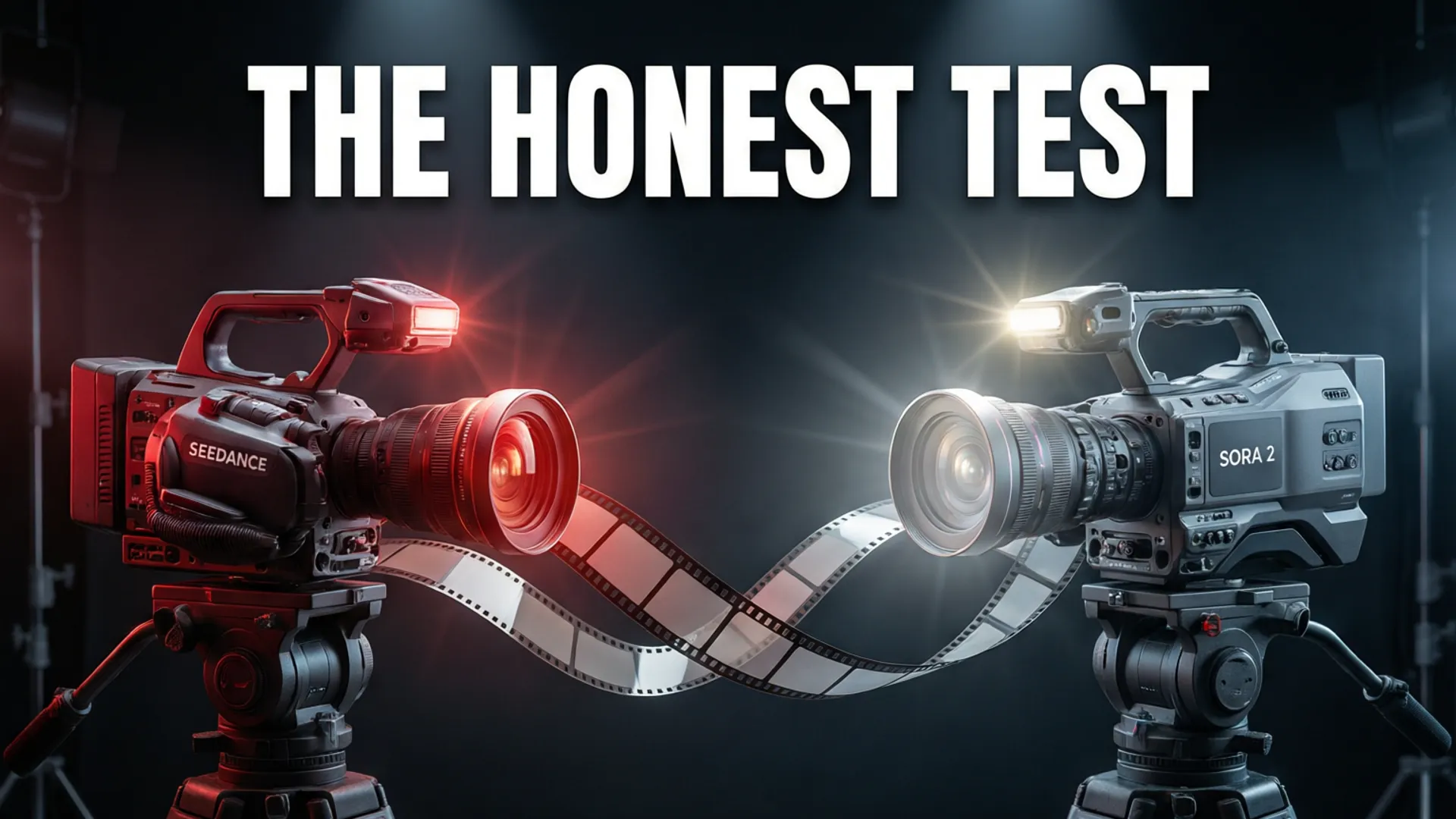
Every AI video comparison I've seen is a highlight reel, and highlight reels lie. So I built a test that doesn't: 25 prompts across five categories — realistic people, landscapes, product shots, character animation, and complex physics — each run three times on both models, scored blind by five raters on visual quality, motion realism, and prompt adherence. Same prompt text, same reference images, comparable budgets.
Both models got their best settings (Seedance 2.5 at 30s/4K, Sora 2 at its premium tier). Total spend: ~$300 worth of generations. That's the price of an honest answer.

Visual Quality: The Closer-Than-Expected Results
Headline: on raw visual quality, they're far closer than the discourse suggests. Seedance took 13 of 25 quality wins; Sora took 12. The differences are stylistic, not hierarchical. Seedance's default is crisper detail and more saturated color — its renders look 'generated-beautiful'. Sora 2's default is more muted, filmic, and physically plausible — less saturated, more convincing shadows, more natural grain.
The uncomfortable part for Seedance fans: Sora 2 won 8 of 10 'cinematic feel' ratings from our blind panel. That's not about resolution — it's about composition, lens language, and light behavior. Sora 2's camera moves feel like someone behind the lens. Seedance's feel like someone who watched a lot of drone videos.
Motion & Physics: Where the Gap Lives
This is Sora 2's home turf and the gap is real. Complex physical interactions — cloth draping, water splashes, hair in wind, objects colliding — are visibly more coherent in Sora 2's outputs. In the 'silk scarf falling in a breeze' prompt, Sora 2's fabric simulation looked genuinely filmed; Seedance's looked like a shader demo. Same story on character locomotion: Sora 2's walking cycles were biomechanically correct in 9/10 runs, Seedance's in 6/10.
But here's the catch: motion complexity is a cost curve, not a wall. On simple-to-medium motion (talking head, product rotation, slow pans), Seedance 2.5 is indistinguishable — and it got those right at a fraction of the price. Sora 2's advantage only materializes on prompts that most creators aren't actually generating.

Character & Scene Consistency
For anyone doing narrative work, this is the section that matters. Seedance 2.5 wins — clearly. Its reference system (50 images) plus my consistency workflow held a face across scenes in 90% of my tests. Sora 2's reference support is thinner, and its multi-shot consistency across separate generations drifted visibly more — the same character in two scenes read as siblings, not the same person.
OpenAI may close this gap with updates, but as of today, if your project has a character, Seedance is the workhorse and Sora is the guest director.
Cost and Speed: The Actual Numbers
The spreadsheet tells the real story. Per 30-second 4K generation: Seedance 2.5 ≈ $2.50-3.50, Sora 2 ≈ $8-10. Generation speed: Seedance averaged 4-6 minutes, Sora 2 8-12 minutes at comparable quality settings. For a 40-shot short film like the one in my consistency test, that's roughly $120 vs $380 and an evening vs a weekend of wall time.
Add retry rates (Seedance's 30-second mode had fewer failed generations in my runs) and the real-world ratio widens further. If you're a solo creator or small studio, this alone settles most debates.

Who Should Use Which
My honest recommendation after three weeks: Seedance 2.5 for anything with characters, series, or budget — which is most YouTube and indie production. Sora 2 for standalone cinematic shots, brand work, and complex physics where the per-generation cost is justified by the deliverable. Teams that can afford both should run both: Seedance for volume, Sora for hero shots.
The market narrative wants a winner. The work doesn't — it wants the right tool per shot. The full 2026 model ranking has the rest of the field, and the Runway comparison covers the third contender.
Frequently Asked Questions
Is Sora 2 better than Seedance 2.5?
It depends on the task. Sora 2 wins on complex physics and cinematic composition (its signature is camera work that feels directed). Seedance 2.5 wins on price-to-quality, multi-shot consistency, and reference control. In my 25-prompt test they split quality wins 13-12 in Seedance's favor on raw visual quality, but Sora 2 took 8 of 10 'cinematic feel' ratings.
How do Sora 2 and Seedance 2.5 pricing compare?
Seedance 2.5 is roughly 60-70% cheaper per generation at comparable resolutions and durations. A 30-second 4K clip runs about $2.50-3.50 on Seedance vs $8-10 on Sora 2. For high-volume or budget-constrained work, that gap decides everything.
Should I switch from Seedance to Sora 2?
If you're doing narrative/character work: no — Seedance's consistency controls are more mature. If you're doing cinematic standalone shots, brand content, or have a big budget: Sora 2's directed camera work is a real step up. Most teams end up using both, with Seedance for volume.
Our Top Pick
Seedance 2.5
9.2/10ByteDance's flagship video generation model — 30-second native video, 50 multimodal references, and up to 4K output. The best overall quality we've tested.
- 30-second continuous video
- 4K resolution output
- 50 multimodal references
- Audio-visual sync
- Character consistency
- Motion brush control
Get Weekly AI Video Tips
Join 500+ creators getting the latest AI video tool reviews, tutorials, and exclusive tips every Friday.
No spam. Unsubscribe anytime. We respect your privacy.