12 Looks, One Model, Zero Studio: I Built a Fashion Lookbook With Seedance 2.5
The Brief
A friend runs a small independent womenswear label — twelve pieces per season, no marketing budget, and a lookbook she usually shoots with a borrowed camera and her sister as the model. She asked me what AI video could do for her drop. I said let me find out first, on my own time, and if it works you get it for the cost of credits.
The rules I set: one model (AI-generated, no real person's likeness), twelve looks matched to her actual garment descriptions, 8 seconds per look, one continuous visual language. If the face wobbled or the clothes moved like rubber, the experiment failed. Two days and $57 later she had a drop-ready lookbook. Here's what I learned, fabric by fabric.

Locking the Face First
Everything starts with one anchor image: a simulated model in front of a neutral gray wall, even light, no makeup drama, front-facing, waist-up. This image gets attached as the identity reference to every single shot. Then the same one-sentence identity descriptor opens every prompt — mine was: "Same woman, mid-20s, dark brown hair pulled back, minimal makeup, calm expression." Not poetic, just load-bearing.
Two rules kept the face stable. First, the shot's style prompt comes after the identity sentence, never before — earlier tokens anchor harder. Second, I never ask for strong emotions. A calm face survives twelve regenerations; a laugh collapses after two. When the label's real campaign wants smiles, that's a conversation for take selection, not generation.

What Each Fabric Does
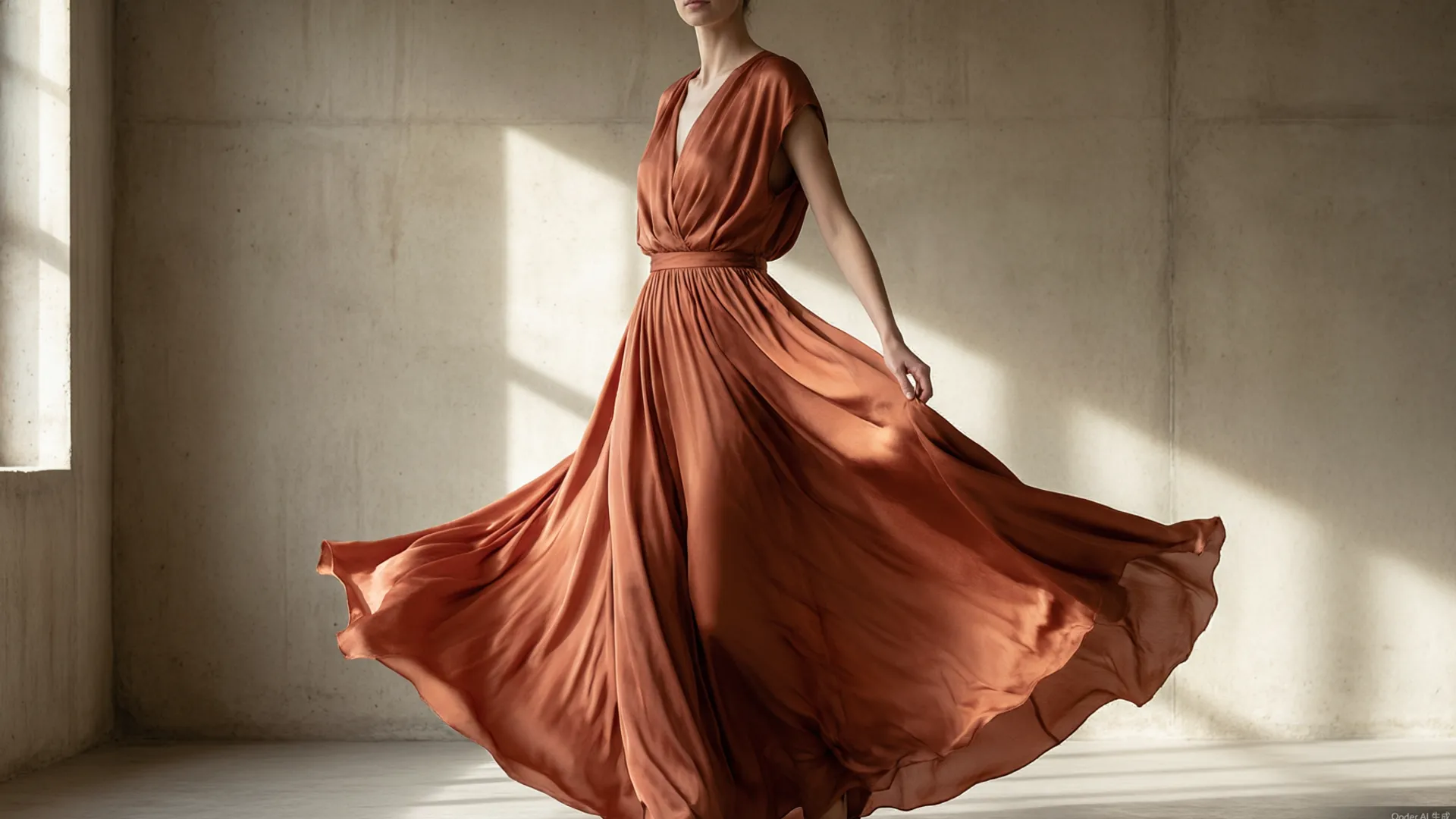
- Silk and satin — chef's kiss. The model understands how light travels along a fold, and a mid-turn generates genuine catwalk moments. Look 4, a terracotta silk dress, produced a single continuous shot where the fabric wraps mid-motion exactly like a real slow-mo runway. No retakes needed.
- Knitwear — reliable. Soft, forgiving, moves in recognizable ways. Cardigans and ribbed tops survived every generation. If you're testing this workflow for the first time, start with knits.
- Denim — fights back. Denim stiffness is a real physical property, and the model bends it like spandex — creases appear and vanish between frames, and the hem whips unnaturally on turns. I solved it by shooting denim looks nearly static: three-quarter stance, slight weight shift, no walking. The stillness passes as intentional editorial and hides the physics failure.
- Tailored wool — needs stillness too. Structured blazers kept their silhouette but the lapels "breathed" in motion, opening and closing slightly against the body. At 8 seconds, nobody flagged it, but I'd never generate a walking jacket shot.
The Walk, the Turn, the Stillness
Three motion verbs, three outcomes. The walk: reliable in a straight line with a fixed camera and the model framed mid-thigh up — but the feet are a lottery, so I compose out the floor. The turn: the money shot when it works — a half-turn letting a skirt or dress reveal movement — and it worked in 9 of 12 attempts, with fabric momentum reading as genuinely cinematic. The stillness: the quiet workhorse. A slow weight shift, a hand touching a cuff, hair moving in a faint draft. Half my final looks are these, and they cut together better than any walk.
Camera language that worked: slow dolly push for looks with detail in the frame (jewelry, buttons), fixed camera for full-body movement, and one handheld-feel shot for the opening look — a slight camera float adds a documentary honesty that makes the whole lookbook feel photographed rather than rendered.

The Three Shots That Never Worked
- Fast spin with hair fly-out. Every attempt turned the face into a smear for 4-6 frames mid-spin. Three attempts, then cut from the plan.
- Sheer layering over another garment. Chiffon over a slip dress produced an indecipherable composite of the two fabrics — the model seemed to merge them into one material. Solid fabrics over solid fabrics: fine.
- Hands adjusting the outfit. Buttons, zippers, a belt buckle — hands with garment interaction is still the frontier. I reframed every such beat to leave hands out of the action, or let the hand exit frame before the garments move.
The label's lookbook went live with the drop last week, and — the metric she cares about — three customers DM'd asking who the model was. The answer is a prompt, not a person, and we're both fine with that staying our secret. If you want the adjacent playbook — shooting garments as products rather than portraits — my product video tutorial covers the ecommerce pipeline, and the character consistency guide dives deeper into identity locking.
Frequently Asked Questions
How do you keep the same model across 12 outfits in Seedance 2.5?
One anchor image does the work: a clean front-facing reference of the model in neutral light, reused in every single shot, with the identical identity descriptor sentence at the start of every prompt. My lookbook held identity across all 12 looks; drift appeared only in one fast-turn shot that I cut.
Which fabrics look best in AI fashion video?
Silk, satin, chiffon, and knits move beautifully — anything with soft drape and flowing motion. Denim and stiff tailoring fight the model; the cloth bends where real denim creases and reads as rubber in motion. Structured jackets work best in near-static shots.
How much does an AI fashion lookbook cost?
My 12-look, 96-second lookbook cost $57 in credits across two days, including failed generations. A comparable studio shoot with a model, stylist, photographer, and location runs $2,000-$6,000 per day in my market — before edit.
Our Top Pick
Seedance 2.5
9.2/10ByteDance's flagship video generation model — 30-second native video, 50 multimodal references, and up to 4K output. The best overall quality we've tested.
- 30-second continuous video
- 4K resolution output
- 50 multimodal references
- Audio-visual sync
- Character consistency
- Motion brush control
Get Weekly AI Video Tips
Join 500+ creators getting the latest AI video tool reviews, tutorials, and exclusive tips every Friday.
No spam. Unsubscribe anytime. We respect your privacy.